Infrared home saunas are generally energy-efficient to run, but costs can vary widely by sauna size and electricity prices in each Australian state.
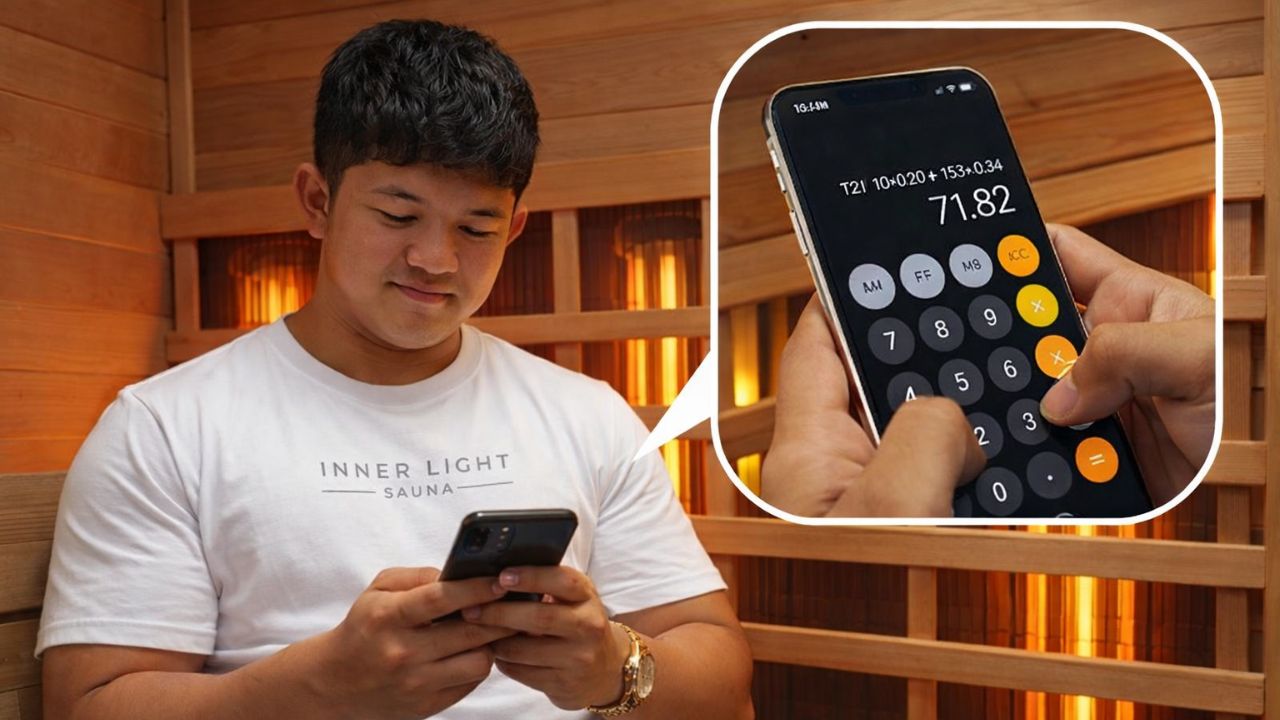
Below we provide a 2026 update on power usage and running costs for different infrared sauna sizes (1-person, 2-person, 3–4-person), including estimated electricity consumption and costs per 30-minute session (assuming daily use), and extrapolated daily, monthly, and annual usage.
We also account for different electricity tariffs across Australian states (NSW, VIC, QLD, WA, SA, TAS, NT, ACT) and the national average, highlighting notable cost differences by size and region.
Sauna Sizes and Power Consumption
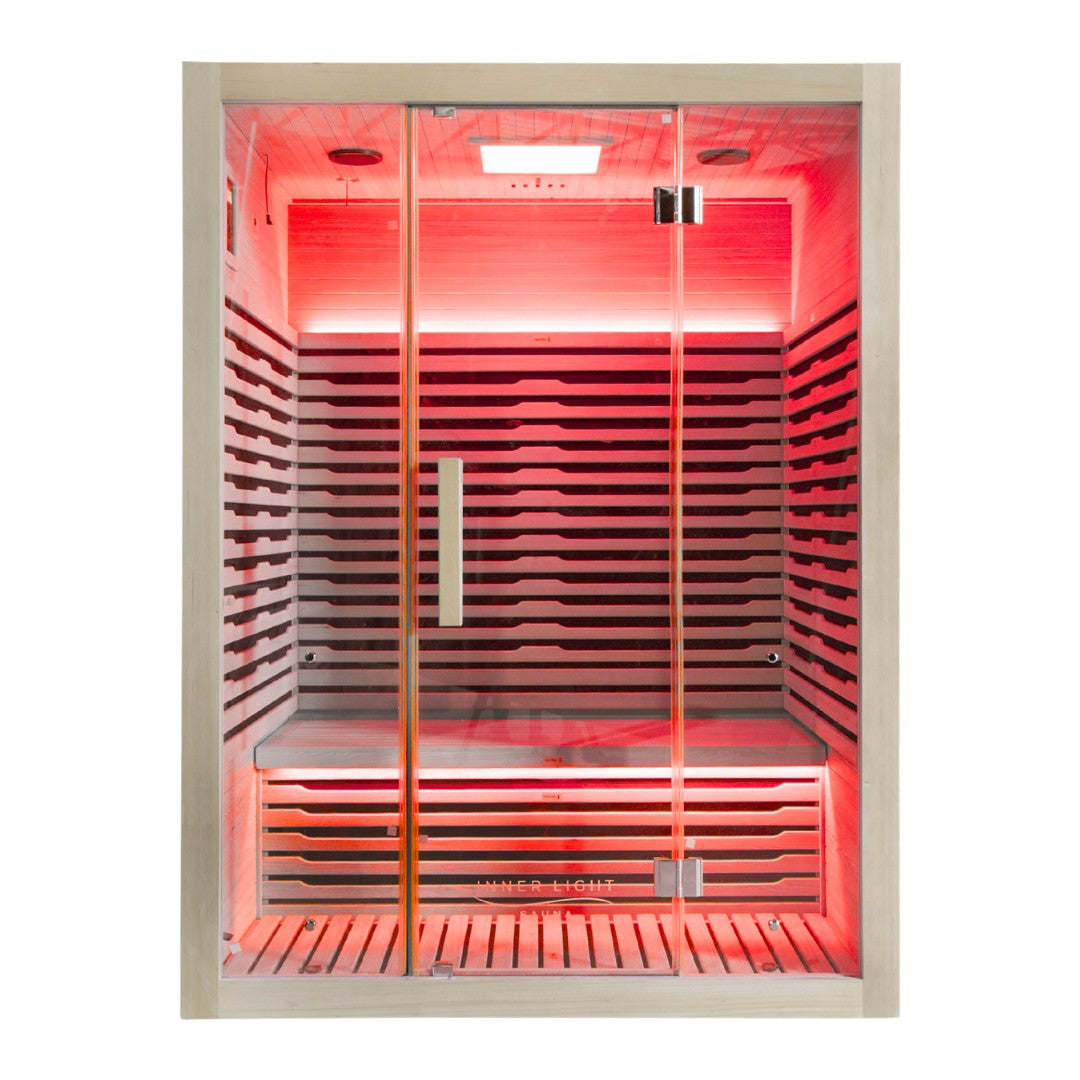
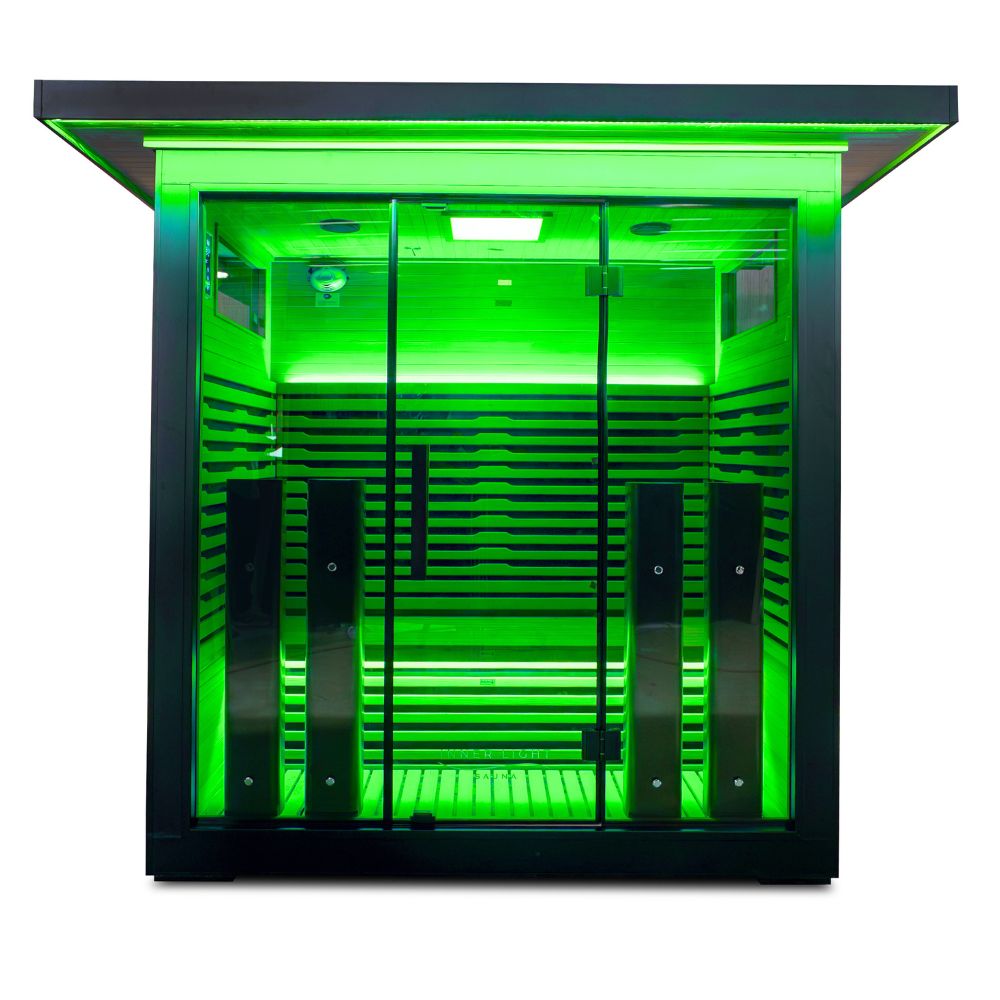
Infrared sauna power requirements scale up with size. A typical 1-person infrared sauna might use around 1.1–1.75 kW of power, a 2-person unit about 1.75–2.4 kW, and a 3–4 person sauna roughly 2.8–3.6 kW at full output.
In general, most home infrared saunas draw between ~1 kW and ~4 kW, whereas very large or commercial units can be higher (up to ~8 kW).
Because of this, larger saunas consume more energy to reach and maintain temperature (especially if used for similar session lengths). For example, Clearlight® Sauna data shows a 1-person model consuming ~1.75 kWh, a 2-person ~2.25 kWh, and a 3-person ~2.8 kWh (for an hour of use at max temperature).
For our estimates, we assume representative power ratings of about 1.5 kW for a 1-person sauna, 2.0 kW for a 2-person, and 3.0 kW for a 3–4 person unit. A 30-minute session (0.5 hours) would therefore use approximately 0.75 kWh, 1.0 kWh, and 1.5 kWh of electricity for 1-, 2-, and 3–4-person saunas, respectively.
In practice, warm-up time may add slightly to these figures (e.g. ~10–15 minutes preheat), but 30 minutes of active use provides a good baseline. The table below summarizes the estimated electricity usage and cost for these sauna sizes per session, per day (one daily 30-min session), per month, and per year, using the national average electricity rate (~$0.28 per kWh):
| Size | Per 30‑min Session (kWh / A$) | Per Day (kWh / A$) | Per Month (kWh / A$) | Per Year (kWh / A$) |
|---|---|---|---|---|
| 1‑Person (~1.5 kW) | 0.75 kWh / $0.21 | 0.75 kWh / $0.21 | ~22.5 kWh / $6.30 | ~274 kWh / $76.65 |
| 2‑Person (~2.0 kW) | 1.0 kWh / $0.28 | 1.0 kWh / $0.28 | ~30 kWh / $8.40 | ~365 kWh / $102.20 |
| 3–4 Person (~3.0 kW) | 1.5 kWh / $0.42 | 1.5 kWh / $0.42 | ~45 kWh / $12.60 | ~548 kWh / $153.30 |
Assumes a flat energy tariff of roughly 28 cents/kWh (national average). Monthly assumes 30 days; annual assumes 365 daily sessions.
As shown above, even daily use of a home infrared sauna tends to consume only a few hundred kWh per year. For perspective, a 2-person sauna used 30 minutes every day uses ~365 kWh/year, costing about $102/year at the national-average rate (roughly $8.40 per month) – a relatively modest addition to an electric bill.
A smaller 1-person unit would be ~$77/year, whereas a large 3–4 person unit could be around $153/year under the same assumptions. In terms of per session costs, this equates to only about $0.20–$0.40 each 30-minute session on the national average rate.
These figures align with other estimates suggesting an infrared sauna might cost on the order of 20–40 cents per hour to run, whereas a traditional electric sauna can cost $0.60–$0.90 per hour (infrared saunas are considerably more energy-efficient than traditional saunas).
Learn more: Infrared Saunas vs. Traditional Saunas
Electricity Rates by State (2025–2026)
Electricity prices in Australia vary significantly by state and region, which in turn affects sauna running costs. As of late 2025, residential flat-rate electricity tariffs ranged roughly from $0.19–$0.20 per kWh in South-East Queensland (the cheapest region) up to about $0.34 per kWh in South Australia, the highest in the nation.
Most other states fall in the mid-20s to low-30s cents per kWh: for example, around $0.27–$0.28 in NSW and ACT, ~$0.25 in Victoria and Tasmania, and about $0.32 in Western Australia. The Northern Territory’s regulated tariff is around $0.30/kWh. By comparison, the national average electricity rate (blending all regions) is roughly $0.25–$0.30 per kWh.
These regional price differences are important. A home in QLD with cheap power will pay much less to run the same sauna than a home in SA with high rates. The table below breaks down the estimated annual running cost of infrared saunas by size for each state/territory, assuming the same 30-minute daily session in each case:
Estimated Annual Running Cost (30-min Daily Infrared Sauna Use)
Approximate costs in AUD by state/territory and sauna size.
Assumes ~1.5kW (1-person), ~2.0kW (2-person), ~3.0kW (3–4 person), one 30-minute session daily.
| Region | 1-person (AUD/yr) | 2-person (AUD/yr) | 3–4 person (AUD/yr) |
|---|---|---|---|
| Australia (avg) | 77 | 102 | 153 |
| NSW | 77 | 102 | 153 |
| VIC | 68 | 91 | 137 |
| QLD | 55 | 73 | 110 |
| WA | 89 | 118 | 177 |
| SA | 93 | 124 | 186 |
| TAS | 68 | 91 | 137 |
| NT | 82 | 110 | 164 |
| ACT | 77 | 102 | 153 |
Which State Is the Cheapest to Run an Infrared Sauna?
Based on the 2026 electricity rates and the annual cost breakdown above, Queensland (QLD) is the cheapest state to run an infrared sauna in Australia.
Using the 30-minute daily session model:
-
1-person sauna: ~$55 per year
-
2-person sauna: ~$73 per year
-
3–4 person sauna: ~$110 per year
That’s noticeably lower than the national average and significantly cheaper than higher-priced states like South Australia or Western Australia.
The reason is simple. South-East Queensland has some of the lowest residential electricity rates in the country. Since the infrared sauna running cost is directly tied to kWh pricing, lower tariffs immediately translate to lower annual cost.
To put it in perspective:
-
A 2-person sauna in QLD (~$73/year)
-
The same sauna in SA (~$124/year)
That’s about a $50 difference per year, purely because of electricity pricing.
Even so, the gap isn’t extreme in real terms. Across Australia, daily infrared sauna use still stays well under $200 per year in every state. But if we’re strictly ranking by cheapest, Queensland takes the top spot for 2026.
Share: