
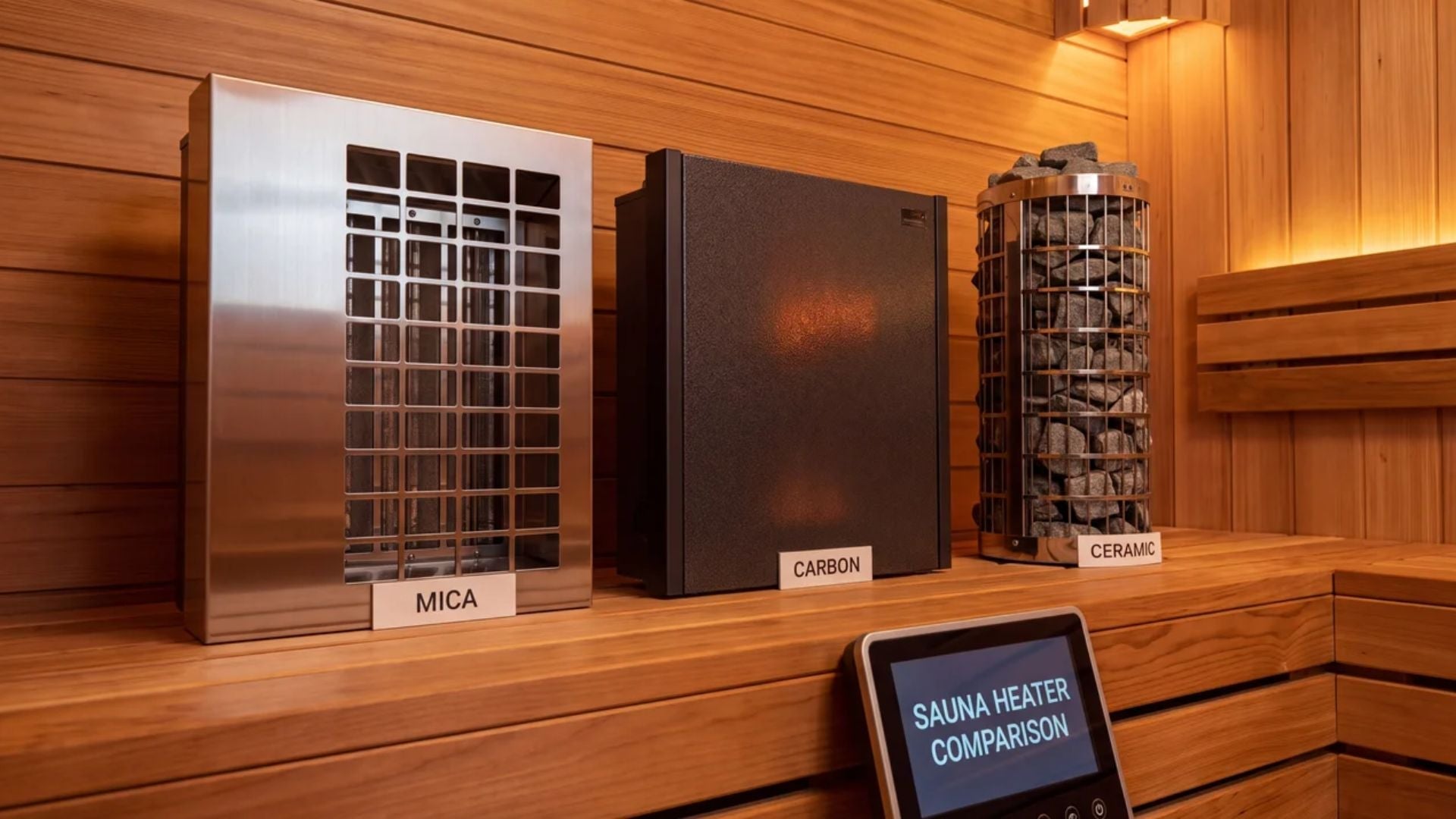
Mica, carbon and ceramic sauna heaters can all produce useful infrared heat, but they deliver it in different ways. Mica and carbon are commonly used as broad panels, while ceramic elements are usually smaller, hotter emitters that create more focused heat.
There is no universal winner based on material alone. Heater size, wattage, position, controls, cabin insulation and the distance from your body have a major effect on the final experience.
Key Takeaways
The best infrared sauna heater is one used in a well-designed system with enough coverage for the cabin and reliable temperature control.
- Mica supports thin resistance heaters that can warm quickly and distribute heat across a panel.
- Carbon heaters commonly use a broad film, fabric or panel to produce gentler surface heat.
- Ceramic emitters operate at higher surface temperatures and may create more concentrated warmth.
- Heater material alone does not prove low EMF performance or better energy efficiency.
- Panel placement and total heater coverage can matter more than the heater label alone.
- Inner Light’s current infrared cabins combine low-EMF mica panels with model-specific full-spectrum elements.
How Does an Infrared Sauna Heater Work?
An infrared sauna heater converts electricity into heat and radiates part of that energy towards the person inside the cabin. It also warms the air, timber, glass and other surfaces over time.
The heater label normally describes the material supporting or producing the heat. It does not tell you everything about the complete electrical system.
A useful comparison should consider:
-
Heater surface area.
-
Surface temperature and power density.
-
Position around the body.
-
Distance from the user.
-
Warm-up and control response.
-
Cabin insulation and ventilation.
-
Electrical shielding, earthing and measured EMF.
Our guide to how infrared saunas work provides more background on radiant heat and cabin temperature.
What Is a Mica Sauna Heater?
A mica sauna heater uses thin mineral sheets as heat-resistant electrical insulation around a resistance element. Mica tolerates high temperatures while allowing the heater assembly to remain relatively thin.
Technical heater manufacturers use mica where rapid response, thin construction and even surface heating are useful. Birk Manufacturing’s mica heater guide describes mica designs as suitable for rapid warm-up and even heat distribution.
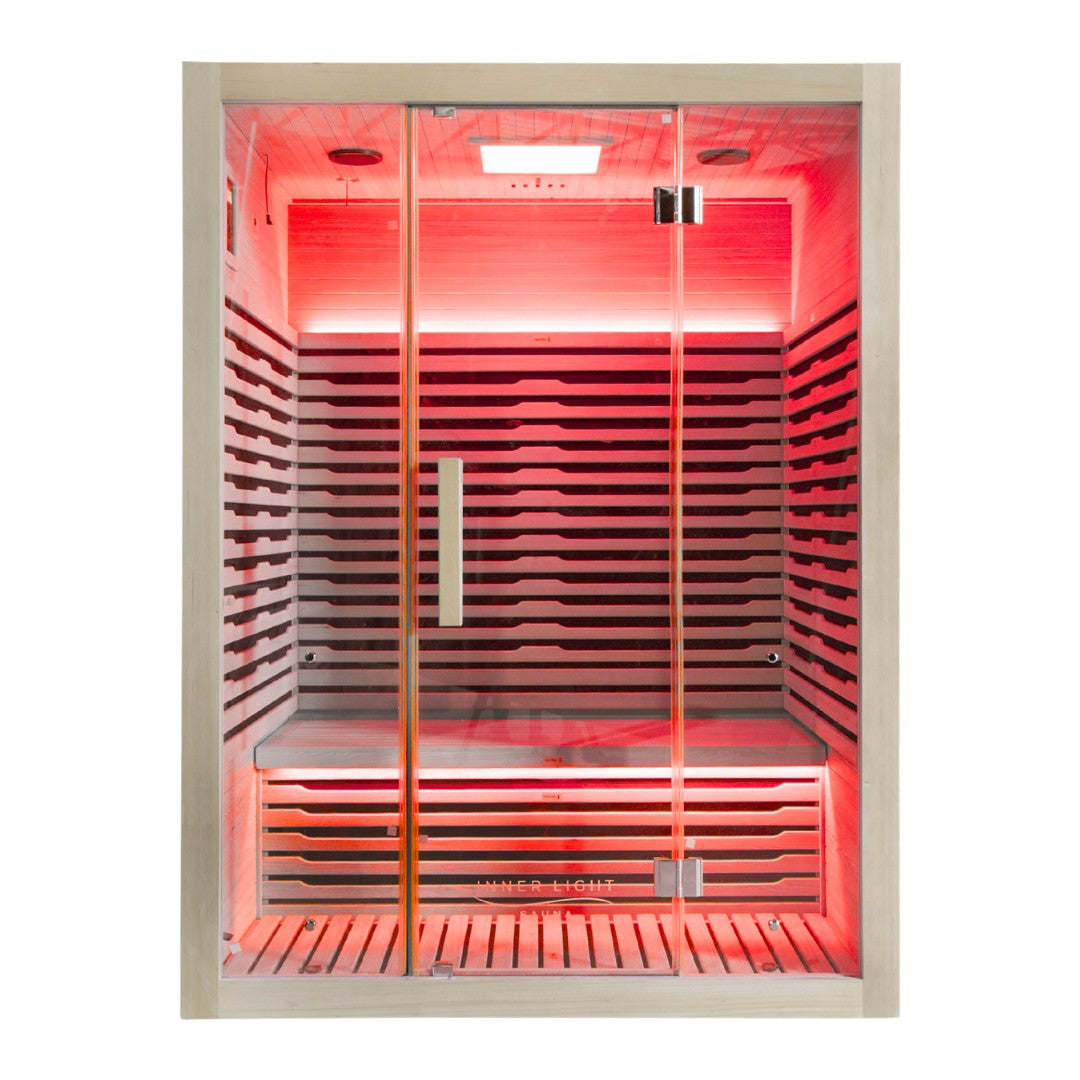
In a sauna, a broad mica panel can be installed behind timber guards or wall sections. This allows several heaters to be positioned around the back, sides, legs and floor rather than relying on one very hot source.
What Does Mica Heat Feel Like?
Mica panel heat generally feels direct and responsive when the panels are positioned close to the seated user. The exact intensity still depends on wattage, panel size and distance.
Our Mali 2 Person Infrared Sauna uses multiple mica heaters around the cabin to provide coverage from different directions. This is more informative than the material name by itself because placement determines which parts of the body receive direct heat.
What Is a Carbon Sauna Heater?
A carbon sauna heater uses carbon-based film, fibres or printed material as part of a broad resistive heating surface. These panels are often large and operate with a lower surface temperature than compact ceramic emitters.
The broad shape can spread warmth across a larger area. Carbon-fibre heater manufacturer TFP Technology notes that carbon fibres can be distributed across thin heating mats to produce a relatively uniform surface.
Carbon panels are often described as gentle or even. That can be accurate for a particular cabin, but it should not be assumed from the word carbon alone. A poorly positioned panel can still leave cold areas, while a well-designed mixed system may provide better all-round coverage.
Are Carbon Heaters More Energy-Efficient?
Not automatically. Nearly all resistance heaters convert most of the electricity they use into heat inside the cabin.
Real-world energy use depends more on total power, warm-up time, insulation, thermostat behaviour and how long the door stays open. Marketing percentages are difficult to compare unless the products were tested under the same conditions.
What Is a Ceramic Sauna Heater?
A ceramic sauna heater uses a resistance element within or around a ceramic emitter. The smaller element can operate at a higher surface temperature and produce strong, more focused radiant warmth.
Ceramic heaters are widely used where a compact emitter and directional heat are useful. Technical descriptions of ceramic infrared elements show that their emitted heat depends on element temperature, geometry and power density.
In a sauna, ceramic elements may feel hotter when you sit close to them. Fewer small emitters can also create a less even experience if the layout does not cover the full seated area.
Do Ceramic Heaters Warm Up Faster?
Ceramic elements can reach a high surface temperature quickly, but that does not guarantee the complete cabin reaches its usable temperature sooner. Cabin volume, glass area, insulation, ambient temperature and total installed power still matter.
Is Mica Better Than Carbon or Ceramic?
Mica is not automatically better in every cabin, but it is a strong option when the design uses several thin panels for rapid, close-range coverage. Carbon can work well for broad, lower-intensity warmth, while ceramic can suit designs that need compact and focused emitters.
The more useful questions are:
-
How many heaters are installed?
-
Where are they positioned?
-
Is there coverage behind the back, beside the body and near the legs?
-
What is the total output for the cabin volume?
-
Has the complete cabin been tested for EMF?
-
Can individual heater parts be serviced or replaced?
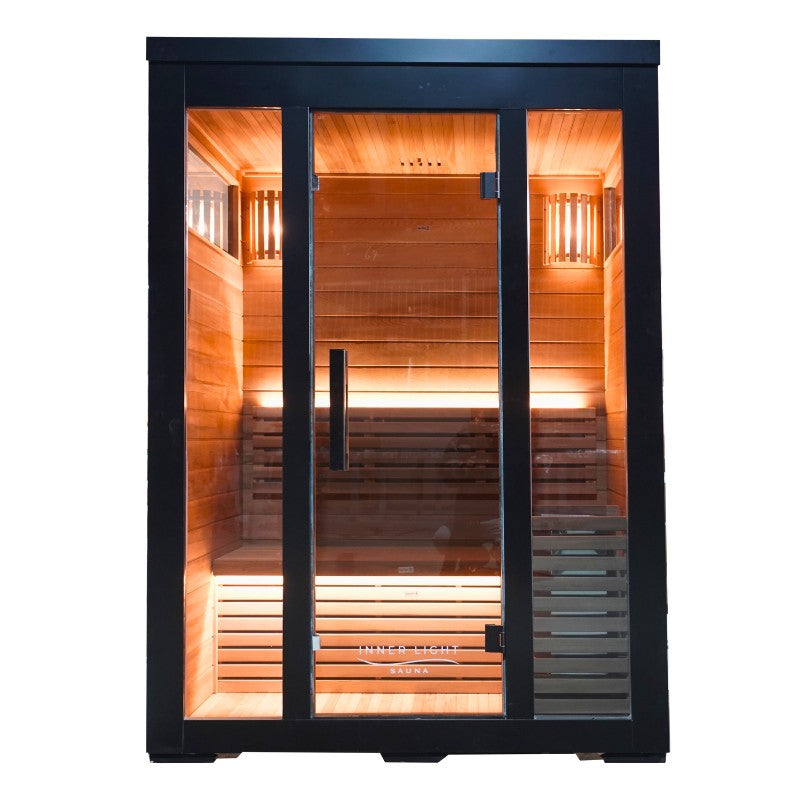
The Twin Seat Infrared Sauna is a useful example of why layout matters. Its larger seated area needs heater coverage planned around several users rather than one panel aimed at one position.
Does Heater Type Determine Whether a Sauna Is Full Spectrum?
No, “full spectrum” and heater material describe different things. Full spectrum refers to the range of infrared wavelengths the system is designed to provide, while mica, carbon and ceramic describe parts of the heater construction.
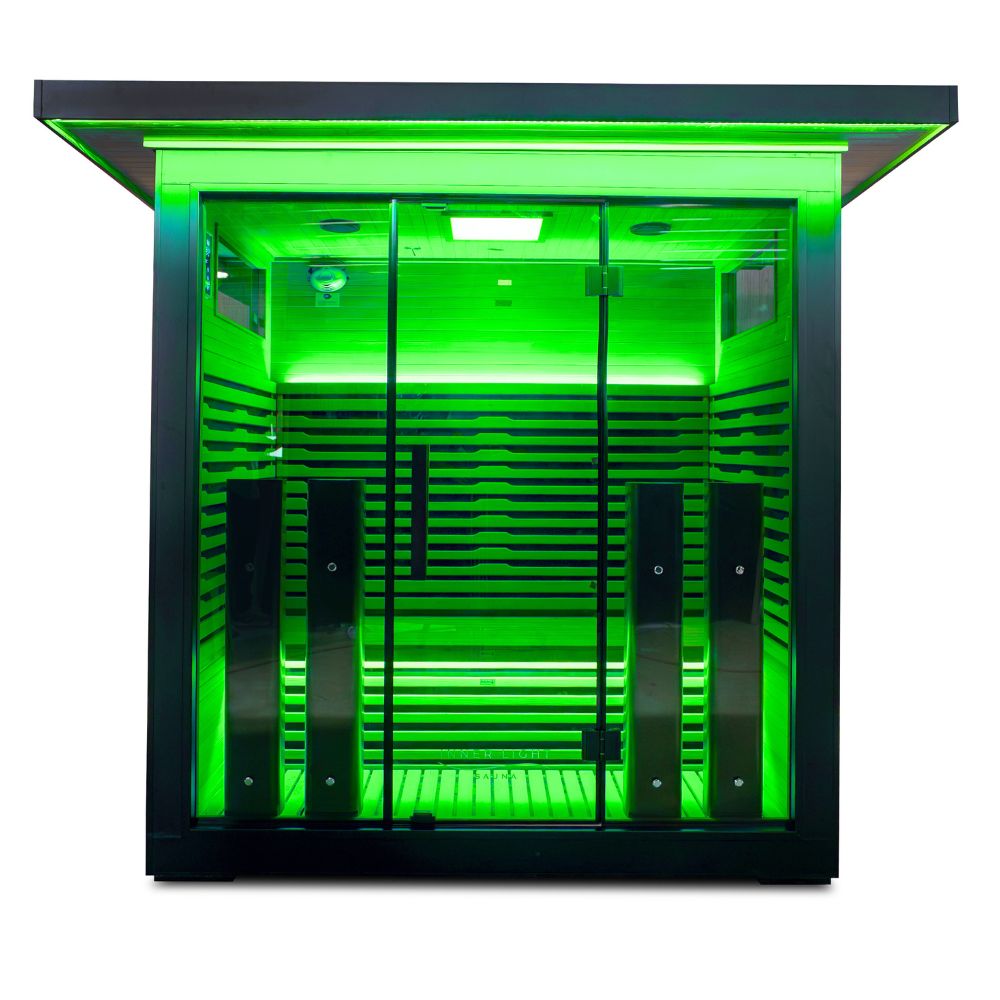
A manufacturer may combine different heater designs inside one cabin. For example, some current Inner Light outdoor models combine mica wall heaters with separate front full-spectrum elements. The Bella Deluxe 3 Person Outdoor Sauna uses this type of multi-position setup.
Does Mica, Carbon or Ceramic Produce Less EMF?
No heater material is automatically low EMF. Electromagnetic field levels are affected by wiring, current, shielding, earthing, element construction and where the measurement is taken.
Look for measurements from the completed cabin rather than a general claim about one panel material. Testing should also state the unit, measurement distance and operating condition.
Which Heater Should You Choose for a Home Sauna?
Choose the complete sauna rather than choosing only a heater material. A comfortable cabin with sensible electrical requirements, good support and well-placed heaters is more useful than a single impressive component claim.
Consider:
-
Cabin size and number of regular users.
-
Indoor or outdoor placement.
-
Heater coverage around the seated body.
-
Electrical connection.
-
Temperature controls and warm-up expectations.
-
Warranty and replacement-part support.
-
Verified EMF measurements for the full unit.
Our infrared sauna buyer’s guide covers the other decisions that should be made alongside heater type.
Final Answer
Mica heaters suit thin, responsive panels; carbon heaters suit broad surface coverage; and ceramic heaters suit compact, higher-intensity heat.
None is automatically best. Judge the entire cabin by its layout, power, control, serviceability and tested performance.


Share: