Sauna Chromotherapy: What Coloured Lights Do and Don't Do

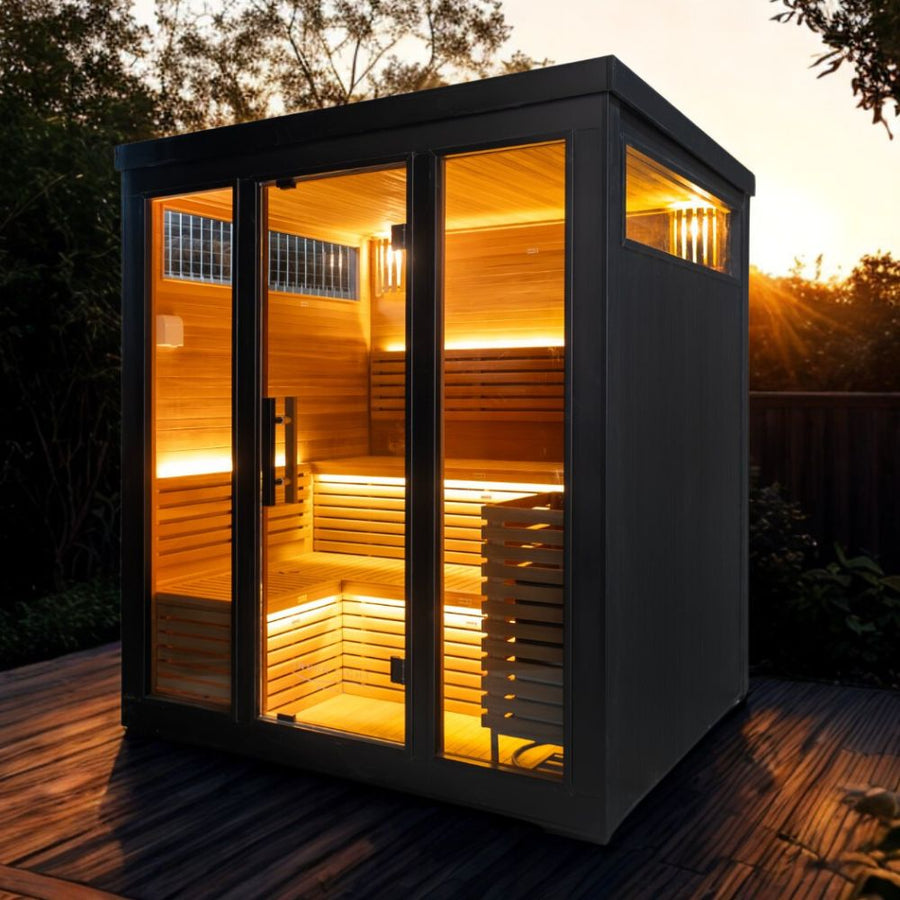
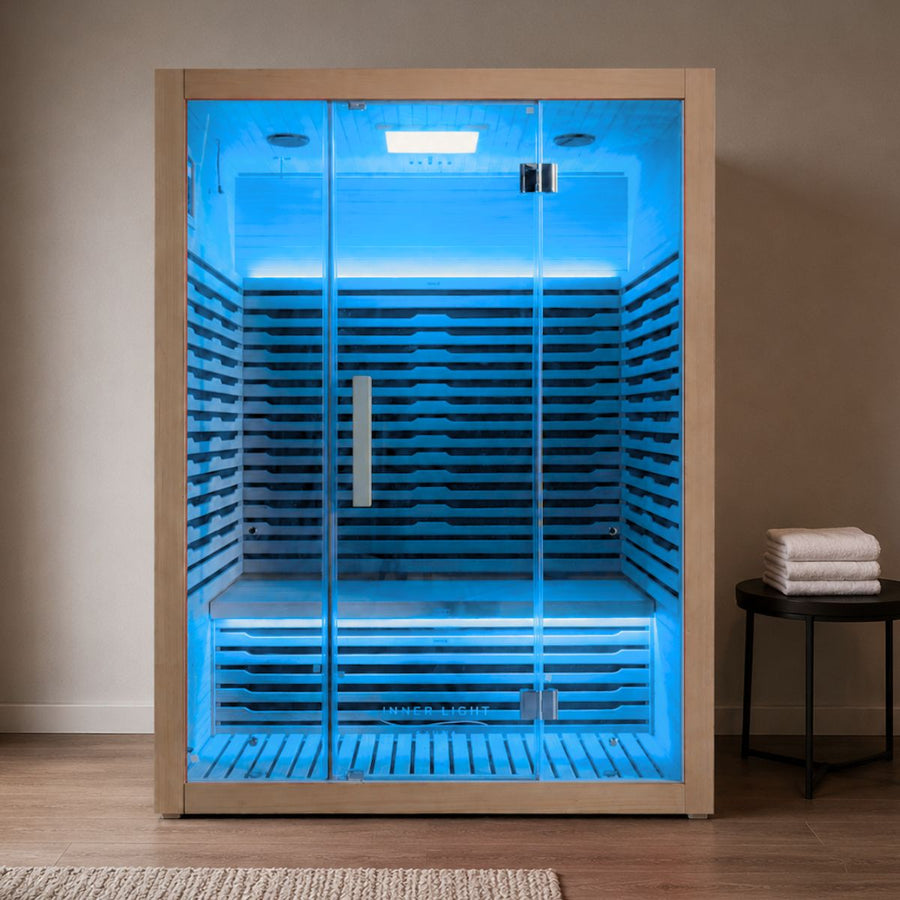
Chromotherapy in a sauna is coloured LED mood lighting built into the cabin. You pick a colour, or let it cycle, to change the feel of the room while the heaters do the warming. It is a comfort and ambience feature, not a medical treatment, and it is not the same thing as a dedicated red light therapy device.
This guide explains what the lights actually do, how they differ from infrared heat and red light panels, and what to check if you want them in your sauna.
What is Chromotherapy?

Chromotherapy, also called colour therapy or colour light therapy, is the idea that different colours of light affect how we feel. In a sauna, it simply means the cabin has coloured lights you can control.
The idea is old. Several ancient cultures used sunlight and coloured glass in healing practices, and colour therapy appears in some traditional medicine systems. Age is not evidence, though. A 2005 review that was broadly sympathetic to chromotherapy still noted that few researchers had tested its principles with quantitative study, and that more research was needed.
Today chromotherapy turns up in spas and home saunas mainly as part of the atmosphere. That is the honest way to think about it: it changes how the room looks and feels to you.
How Does Chromotherapy Work in Infrared Saunas?
Most saunas with chromotherapy use LED strips or panels built into the ceiling, walls or under the benches. You choose a colour on the control panel, and on some models you can set the brightness or run a programme that cycles slowly through the colours.
The lights are separate from the heaters. Turning them on or changing the colour does not change how hot the sauna gets or how the infrared panels work. If you switch the lights off, you still get the same heat.
Some marketing claims that each colour reaches a different depth in the skin and triggers a specific effect in the body. We have not found good human evidence that the ordinary coloured LEDs used for cabin lighting do this, so we don't make that claim.
Coloured Lighting vs Infrared Heat vs Red Light Therapy
These three things are often lumped together in sauna marketing. They are different, and it helps to know which one you are paying for.
| Coloured cabin lighting (chromotherapy) | Infrared heat | Dedicated red light therapy panel | |
|---|---|---|---|
| What it is | Visible LED lights in the cabin that you can set to different colours. | The heaters that warm you and the cabin. Most of what they give off is felt as heat rather than seen. | A separate device that shines red and/or near-infrared light at a set wavelength and strength, usually at close range. |
| What it does | Changes the mood and look of the room. Some people find certain colours more relaxing or pleasant. | Warms your body so you sweat. This is the core of the sauna session. | Delivers a measured dose of light to a target area. Research on these devices uses specific wavelengths, distances and session times. |
| What to check | Colour range, brightness control, whether it holds a steady colour, and how easy the controls are to use. | Heater type and placement, power supply needs, warm-up time and temperature range. | The stated wavelength, light output (irradiance), recommended distance and session length, and any safety or regulatory information. |
The key point: results from studies on dedicated red light devices don't transfer to coloured mood lights. A red LED strip in a sauna ceiling is not delivering the same thing as a therapy panel used close to the skin.
Is Chromotherapy the Same as Red Light Therapy?
No. Chromotherapy in a sauna is about the colour of the room. Red light therapy (also called low-level light therapy or photobiomodulation) uses a dedicated device that delivers red or near-infrared light at a particular wavelength and dose. Researchers studying these devices test specific settings, and they still describe the best wavelength and dose as unsettled.
Setting your cabin lights to red gives you a red room. It does not turn your sauna into a red light therapy device. If red light therapy is what you are after, look at a purpose-built panel and its published specifications. We compare the two in more detail in our guide to infrared sauna vs red light therapy.
What Chromotherapy Can Offer
Chromotherapy is best judged as a comfort feature. Here is what it genuinely gives you.
Comfort and Atmosphere
Lighting changes how a small room feels. A soft, dim colour can make the cabin feel calmer than bright white light, and many people simply enjoy sitting in a colour they like. That personal preference is a fair reason to want the feature.
Mood and Personal Preference
Colour and mood are linked in everyday experience, but the effect varies from person to person and there is no reliable rule that a given colour produces a given feeling. Treat any colour chart as a starting point, then use what you like.
User Control
The real value is control. Good systems let you choose a steady colour, adjust brightness, or turn the lights off altogether. Being able to dim the cabin for a quiet evening session, or brighten it to read the controls, makes the sauna nicer to use.
How People Commonly Use Each Colour
The list below describes how people often choose colours for the feel of the room. These are preferences, not health effects.
- Red and orange: A warm, low tone that suits the feel of a heated room. Some people like it for evening sessions because it is less harsh than white light.
- Blue: A cool tone that many people pick when they want the cabin to feel calm and quiet.
- Green: A soft, neutral tone some users find easy on the eyes for longer sessions.
- Yellow: A brighter, warmer light. Handy if you want to read the control panel or prefer a livelier feel.
- Purple: A dim, low-contrast tone people often choose for winding down, meditation or simply sitting quietly.
Cycling and Mixing Colours
Many systems can hold one colour or cycle slowly through several. Cycling is mostly a matter of taste. If you find the changes distracting, set a single colour or turn the lights off.
Chromotherapy vs. Regular Infrared Sauna Experience
A session with chromotherapy and one without it give you the same heat. The difference is the look and feel of the cabin.
Enhancing the Sauna Experience
If you enjoy setting the mood, coloured lighting adds a layer of choice to each session. If you mainly want the heat and some quiet, plain lighting does the job just as well.
Who Might Enjoy Chromotherapy More?
People who use the sauna to wind down in the evening, or who like a particular atmosphere for meditation or stretching, tend to get the most from coloured lighting. For someone who simply wants the heat, it may feel like an extra they don't need. It comes down to personal preference.
Are There Any Risks or Drawbacks to Chromotherapy?
Coloured cabin lights are low risk for most people, but a few points are worth knowing.
-
Photosensitive epilepsy:
Epilepsy Action Australia notes that flashing or flickering lights can trigger seizures in some people, and that red flickering light can be a trigger, particularly in a darkened room. If you or someone in your household has photosensitive epilepsy, avoid flashing or fast-changing light modes and use a steady colour or plain lighting. Ask your doctor if you are unsure. -
Light sensitivity and headaches:
Some people find bright or intense light uncomfortable. Start with a dim setting, and turn the lights down or off if they bother you. -
Health conditions and medication:
If you have a health condition, take medication, or are unsure whether sauna use is right for you, talk to your doctor first. Coloured lighting doesn't change the usual sauna safety rules. See our guide on who shouldn't use infrared saunas.
As with any sauna session, leave straight away if you feel uncomfortable, dizzy, light-headed or unwell, and drink water before, during and after.
Choosing a Sauna with Chromotherapy Features
If coloured lighting matters to you, these are the details worth checking before you buy.
Key Features to Look For
-
Good-quality LED lighting:
Look for even, flicker-free lighting with a decent range of colours. Cheap LEDs can look patchy or flicker at low brightness. -
Steady colour and dimming:
Make sure you can hold one colour, adjust brightness and switch the lights off completely. These controls matter more than the number of preset programmes. -
Easy-to-use control panel:
You should be able to change the lights easily from inside the cabin. Some models also offer app or remote control. -
Electrical safety:
Lighting inside a hot cabin should be rated for the conditions and installed as part of the sauna's certified electrical system. Ask the seller what certification the sauna carries. -
Clear claims:
Be wary of any seller who promises health outcomes from cabin colours. Ask what the lights are, not what they cure.
Final Thoughts
Chromotherapy in a sauna is coloured mood lighting. It can make the cabin more pleasant and gives you more control over how each session feels, which is a perfectly good reason to choose it.
It does not add to the heat, and it is not a substitute for a dedicated red light therapy device. Choose a sauna for its heat, size and build first, then treat good lighting controls as a welcome extra.
References
- Azeemi, S. T. Y., & Raza, S. M. (2005). A critical analysis of chromotherapy and its scientific evolution. Evidence-Based Complementary and Alternative Medicine, 2(4), 481–488. https://doi.org/10.1093/ecam/neh137
- Avci, P., Gupta, G. K., Clark, J., Wikonkal, N., & Hamblin, M. R. (2014). Low-level laser (light) therapy (LLLT) for treatment of hair loss. Lasers in Surgery and Medicine, 46(2), 144–151. https://doi.org/10.1002/lsm.22170
- Epilepsy Action Australia. (n.d.). Photosensitive epilepsy. Retrieved November 17, 2026, from https://www.epilepsy.org.au/about-epilepsy/understanding-epilepsy/photosensitive-epilepsy/