

No, current human research does not prove that sauna use increases testosterone levels or sperm count. A few small experiments have measured short-term hormonal changes, but the more repeatable finding is that testosterone usually stays broadly unchanged. For sperm, repeated high-heat exposure may temporarily reduce count or movement in some men rather than increase it.
That does not mean sauna use causes permanent infertility. The available studies are small, use different heat routines and mostly involve traditional Finnish saunas. The safest conclusion is that sauna may offer other wellbeing benefits, but it should not be promoted as a proven testosterone or sperm-boosting treatment.
Key Takeaways
- Human studies do not show that sauna use reliably increases testosterone or sperm count.
- One very small study found a temporary testosterone rise under an extreme humid-sauna condition, but repeated-exposure studies found no significant increase.
- Small sauna studies found no sperm-count benefit or recorded a temporary reduction in sperm count and movement measures.
- Men trying to conceive should discuss regular heat exposure with a GP, urologist or fertility specialist.
Can Sauna Increase Testosterone Levels?
The evidence is mixed at first glance, but the details matter.
In a 1989 experiment involving eight healthy young men, testosterone increased during one of three sauna conditions. However, the increase appeared only in the most demanding condition: 80°C heat that became humid and continued until subjective exhaustion. Oral temperature rose by 3.2°C and heart rate increased sharply. This was an acute stress response in a tiny sample, not proof of a lasting improvement in testosterone or male health (Kukkonen-Harjula et al., 1989).
Studies using repeated exposure have been less encouraging. Leppäluoto et al. (1986) studied ten men and seven women during one week of twice-daily sauna bathing. Testosterone, follicle-stimulating hormone and luteinising hormone did not change significantly.
A newer study followed 30 young men through four 12-minute sauna rounds, each followed by cold-water immersion. Testosterone moved from 4.04 to 4.24 ng/mL, but the difference was not statistically significant. Men with higher physical activity levels had higher testosterone before and after sauna, which points to physical activity—not the sauna session—as the clearer explanation (Podstawski et al., 2021).
In simple terms, one short-lived rise under an extreme condition should not be turned into the claim that sauna raises testosterone. We would need larger controlled trials showing a meaningful and sustained increase before making that promise.
Does Sauna Increase Sperm Count?
No human sauna study located for this review showed a reliable increase in sperm count.
The clearest sauna-specific study followed ten men with normal semen results. They used a Finnish sauna at 80–90°C for 15 minutes, twice a week, for three months. Sperm count and motility declined significantly, while sex hormone levels did not change. Researchers also found changes in sperm chromatin, mitochondrial function and heat-stress markers. Importantly, all measured effects had reversed six months after the men stopped the sauna routine (Garolla et al., 2013).
Another study involved eight healthy men exposed to sauna over two weeks. Average sperm count, percentage motility, morphology and semen volume did not change significantly. However, several computer-measured sperm movement speeds decreased and returned to their earlier values within one week of stopping (Saikhun et al., 1998).
An older single-session study can be easy to misread. Some sperm movement and metabolic measures rose immediately after sauna, but sperm numbers later fell and returned to normal within several weeks. A brief change in how sperm move is not the same as producing more sperm or improving the chance of conception (Brown-Woodman et al., 1984).
Why Heat and Sperm Need Different Thinking
The testes sit outside the body because sperm production works best below core body temperature. Repeated scrotal heating can interfere with developing sperm cells. Because sperm production takes weeks, a change may appear after the heat exposure rather than during the session. Recovery may also take weeks or months.
Semen measures are not the same as fertility. A lower count or movement result does not automatically mean a person cannot conceive, and a normal result does not guarantee pregnancy. A 2020 endocrine review concluded that sperm production may decrease, particularly in people who are not accustomed to sauna, but reduced fertility has not been established as a result of regular sauna habits (Huhtaniemi & Laukkanen, 2020).
What About Infrared Saunas?
Most direct research on testosterone and sperm used traditional Finnish saunas. Infrared cabins usually run at a lower air temperature, but they still heat the body. There are not enough direct human trials to say that infrared sauna increases testosterone, raises sperm count or has a different fertility effect from traditional sauna.
This distinction is important for accurate health content. Findings from an 80–90°C Finnish sauna cannot simply be transferred to every infrared routine. At the same time, a lower cabin temperature is not proof that reproductive effects are impossible.
Using a Sauna When You Are Trying to Conceive
If you are trying for a baby, have an abnormal semen analysis or are receiving fertility treatment, ask your GP, urologist or fertility specialist about sauna, hot-tub and other heat exposure. They may recommend reducing or pausing regular heat while your semen quality is assessed. There is no single research-backed temperature, session length or waiting period that suits everyone.
If sauna remains appropriate, keep sessions within the product instructions and avoid treating hotter or longer as better. Leave the cabin if you feel dizzy, unwell or excessively hot. Hydrate normally and do not use sauna as a substitute for medical assessment or proven treatment for low testosterone or infertility.
Choosing a Home Sauna
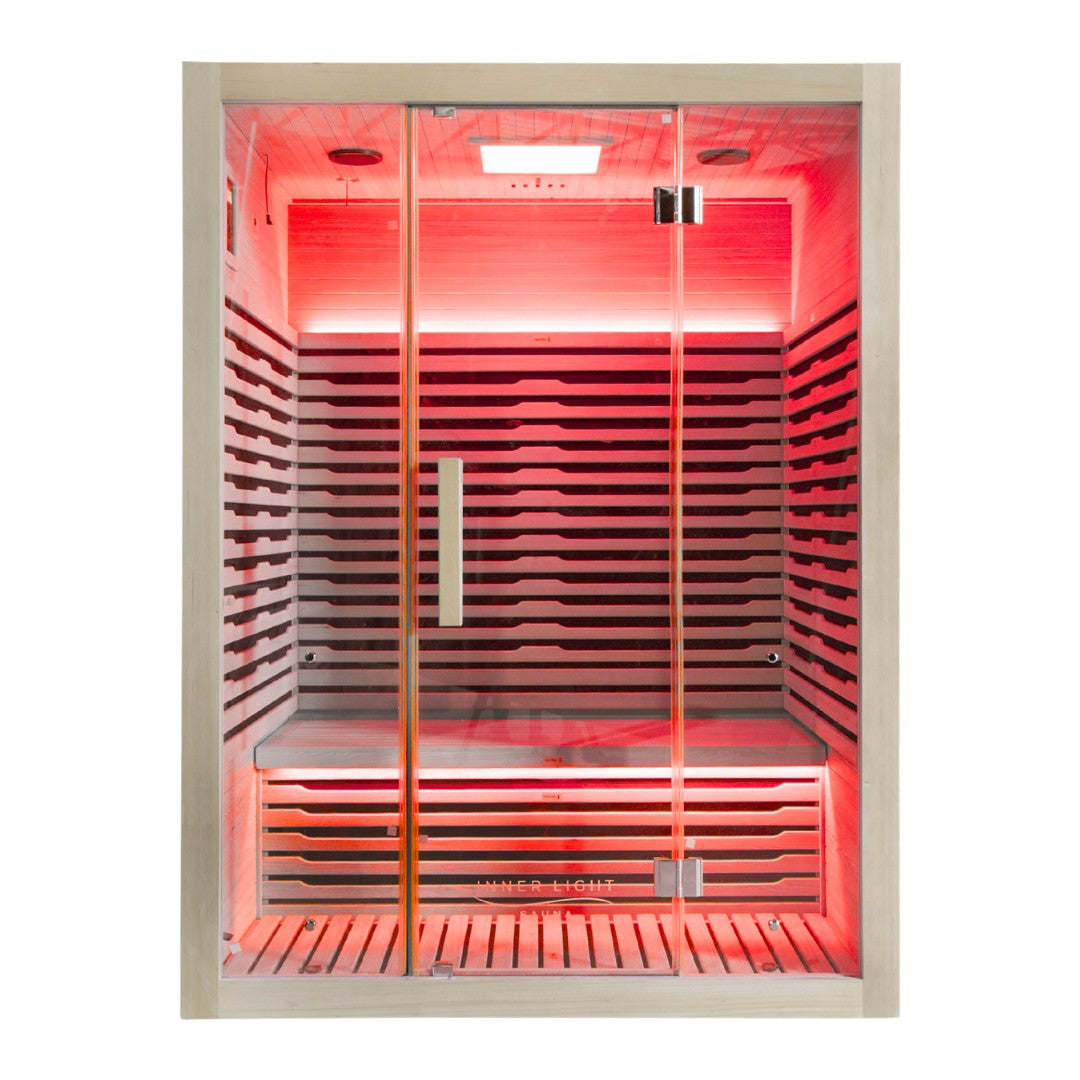
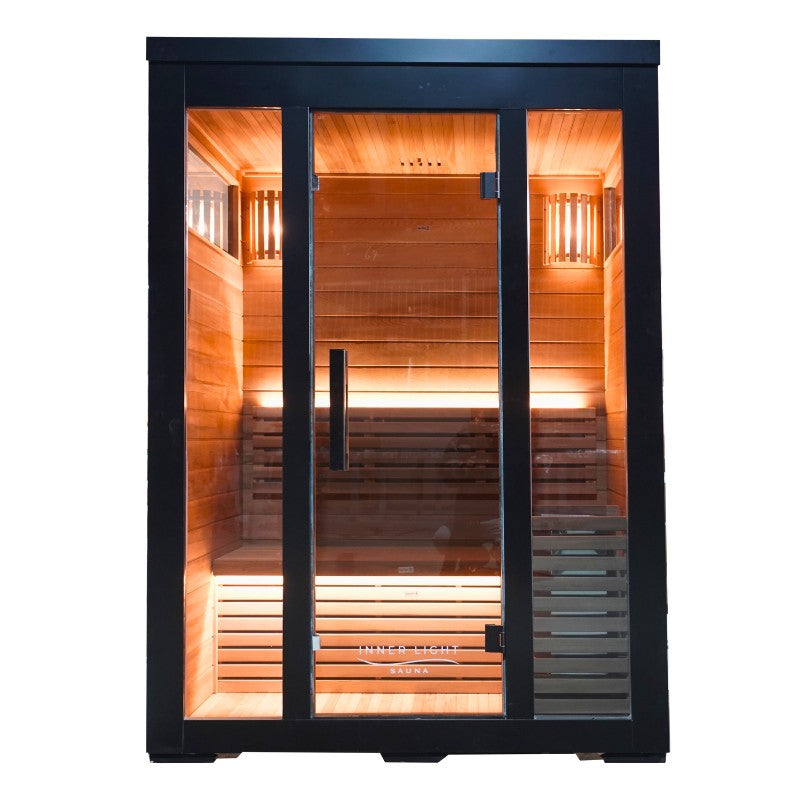
Choose a sauna for its fit, controls and intended use—not for an unsupported hormone claim. The Sauna Finder can help narrow the options. You can also compare indoor infrared saunas and traditional saunas. For a compact option, see the Mali 2 Person Indoor Infrared Sauna or the La Mar 2 Person Outdoor Infrared Sauna.
Final Answer
Current human evidence does not show that sauna use reliably increases testosterone levels or sperm count. One tiny acute study recorded a testosterone rise under an extreme humid-heat condition, but repeated-exposure studies found no significant increase. Small sperm studies found no count benefit and sometimes recorded temporary declines in count or movement. These changes were reversible in the studies that followed recovery, but the research remains limited. Men trying to conceive should discuss regular heat exposure with a qualified clinician.
Sauna, Testosterone and Sperm
Frequently Asked Questions
These answers explain what the available human studies can and cannot tell us about sauna use, testosterone and sperm health.
Can Sauna Raise Testosterone?
It has not been shown to raise testosterone reliably. One eight-person experiment found an acute increase under its most intense humid-sauna condition, while repeated-exposure studies found no statistically significant testosterone increase.
Does Sauna Increase Sperm Count?
No reliable human evidence shows an increase. One small study found no significant count change, while another found a temporary decline after three months of repeated sauna exposure.
Are Sauna-Related Sperm Changes Permanent?
Permanent damage was not demonstrated in the small studies reviewed. Movement changes recovered within one week in one study, and broader sperm changes had reversed six months after exposure stopped in another.
Is Infrared Sauna Better for Testosterone or Sperm?
We do not know. There are not enough direct studies comparing infrared and traditional sauna for these outcomes, so neither a benefit nor a difference can be claimed confidently.
References
Brown-Woodman, P. D. C., Post, E. J., Gass, G. C., & White, I. G. (1984). The effect of a single sauna exposure on spermatozoa. Archives of Andrology, 12(1), 9–15. https://doi.org/10.3109/01485018409161141
Garolla, A., Torino, M., Sartini, B., Cosci, I., Patassini, C., Carraro, U., & Foresta, C. (2013). Seminal and molecular evidence that sauna exposure affects human spermatogenesis. Human Reproduction, 28(4), 877–885. https://doi.org/10.1093/humrep/det020
Huhtaniemi, I. T., & Laukkanen, J. A. (2020). Endocrine effects of sauna bath. Current Opinion in Endocrine and Metabolic Research, 11, 15–20. https://doi.org/10.1016/j.coemr.2019.12.004
Kukkonen-Harjula, K., Oja, P., Laustiola, K., Vuori, I., Jolkkonen, J., Siitonen, S., & Vapaatalo, H. (1989). Haemodynamic and hormonal responses to heat exposure in a Finnish sauna bath. European Journal of Applied Physiology and Occupational Physiology, 58(5), 543–550. https://doi.org/10.1007/BF02330710
Leppäluoto, J., Huttunen, P., Hirvonen, J., Väänänen, A., Tuominen, M., & Vuori, J. (1986). Endocrine effects of repeated sauna bathing. Acta Physiologica Scandinavica, 128(3), 467–470. https://doi.org/10.1111/j.1748-1716.1986.tb08000.x
Podstawski, R., Borysławski, K., Pomianowski, A., Krystkiewicz, W., & Żurek, P. (2021). Endocrine effects of repeated hot thermal stress and cold water immersion in young adult men. American Journal of Men’s Health, 15(2), 15579883211008339. https://doi.org/10.1177/15579883211008339
Saikhun, J., Kitiyanant, Y., Vanadurongwan, V., & Pavasuthipaisit, K. (1998). Effects of sauna on sperm movement characteristics of normal men measured by computer-assisted sperm analysis. International Journal of Andrology, 21(6), 358–363. https://doi.org/10.1046/j.1365-2605.1998.00138.x



Share: